Kasper: an AI assistant for 20 million products
customers used Kasper in 3 months
products in Kaspi Shop to choose from
Kasper conversations end with a product selection
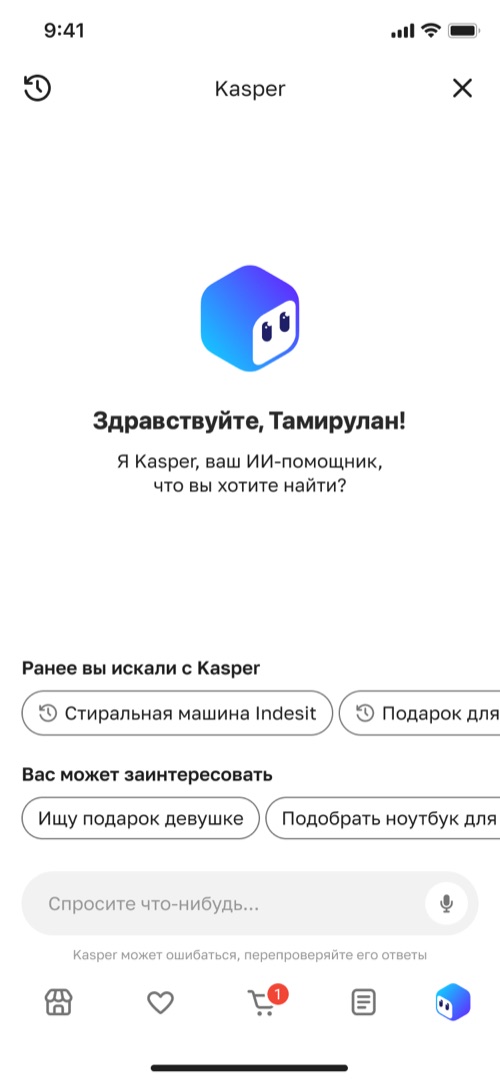
Context. Kaspi Shop has 20 million products. Finding a product isn’t the problem. Choosing one is.
Kasper is an AI assistant you can explain your task to in your own words, by text or voice: “find a vacuum for my apartment and car” or “a gift for mom”.
The key question. Ask a follow-up or show products right away?
If the request is detailed — “a simple flower vase, no taller than 30 cm, for a small bouquet” — Kasper shows matching products right away. Asking someone who has already said everything is annoying.
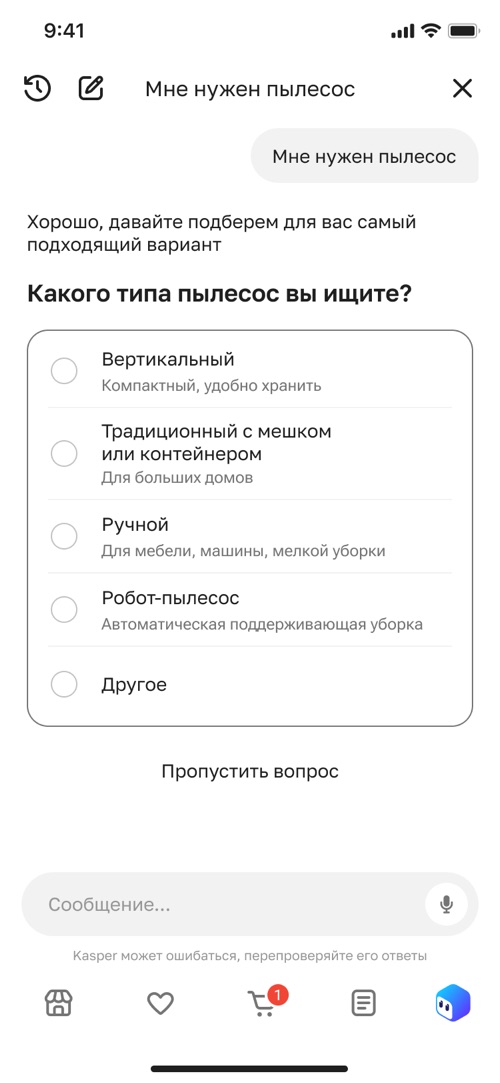
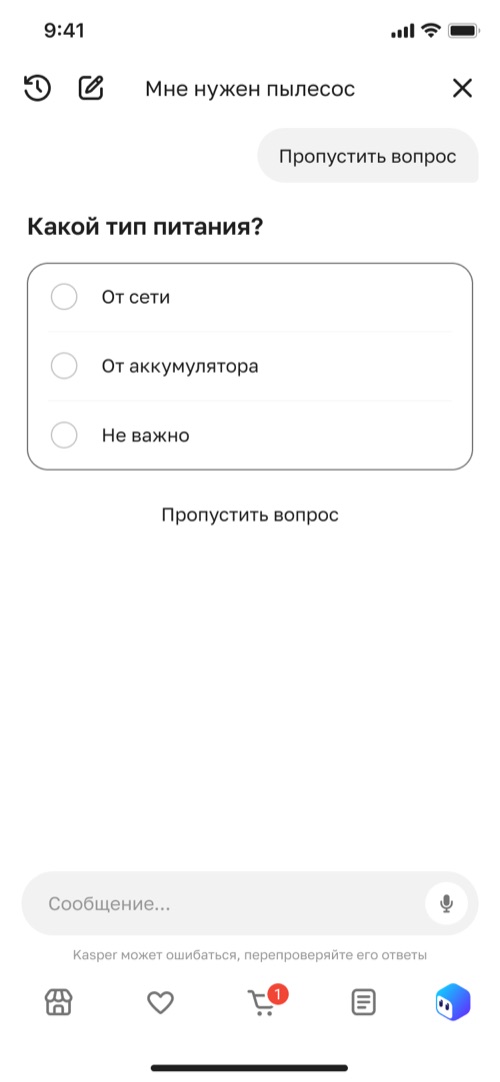
If the request is short — “I need a vacuum” — Kasper prepares 4–5 clarifying questions. This way even someone who knows nothing about vacuums can choose.
Any question can be skipped. Kasper still shows products and offers to refine the details at the end. An assistant shouldn’t turn into a form you can’t get around.
Same principle as in Kaspi AI: don’t guess — ask.
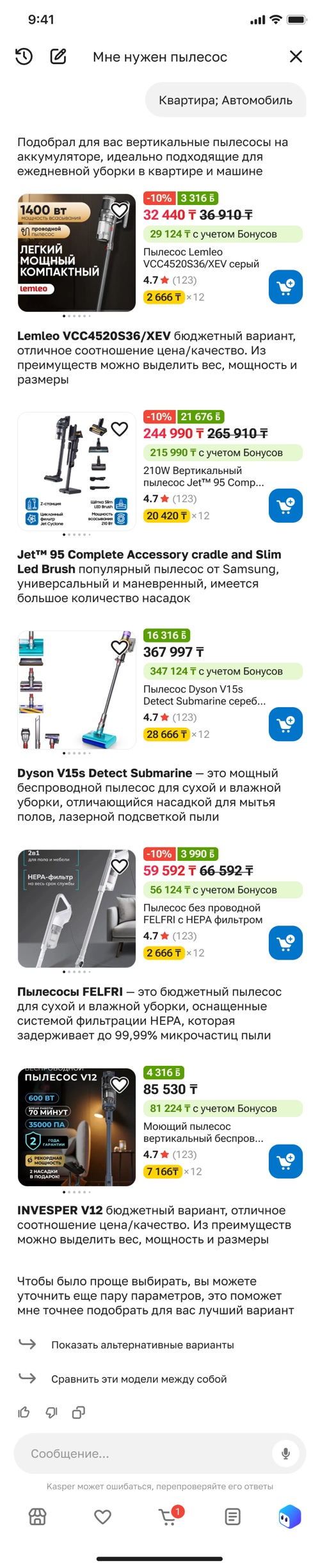
Grid or list. This part of the logic is mine: Kasper picks the layout based on two things — what kind of product it is and how much it knows about you.
For electronics, cosmetics and household chemicals, specs matter: each product in the list comes with a note on why it fits. For vases, furniture and blinds, looks matter more, so it’s a large photo grid.
If someone skipped the clarifying questions, Kasper also shows a grid: it hasn’t fully understood what’s needed, and it’s more honest to show a wider range than 5 random picks.
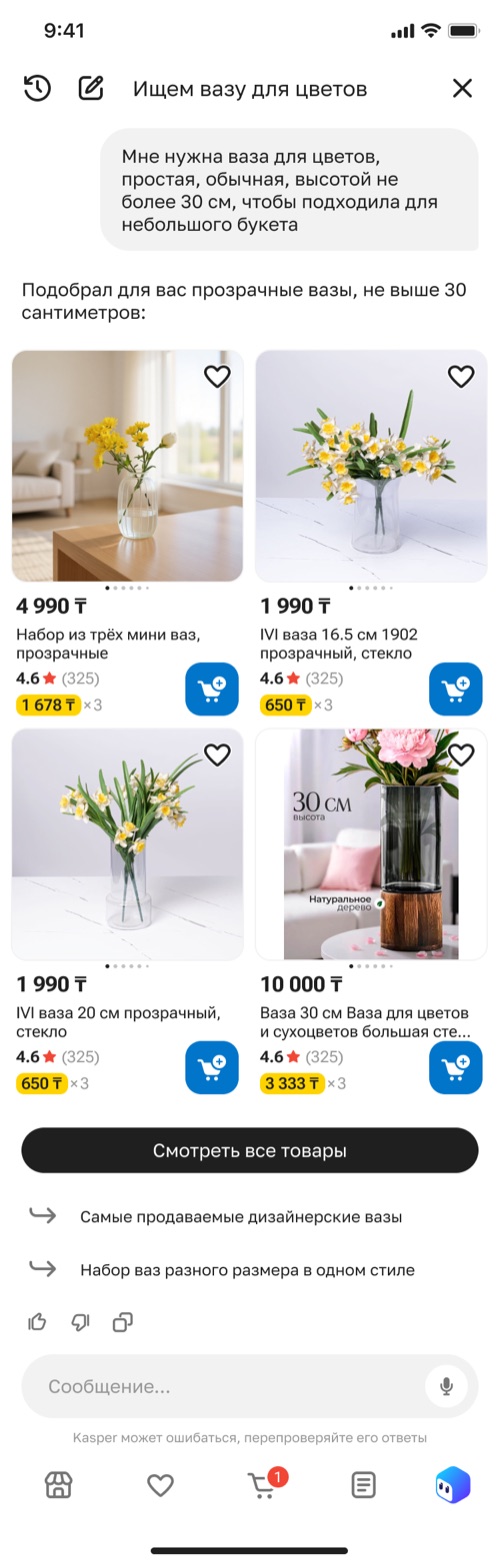
Transparency. Kasper shows what it’s doing and is upfront that it can make mistakes.
- While thinking, it says what it’s doing: “Analyzing and comparing models…”. You can stop it at any time.
- Under every answer — a 👍 / 👎 rating and a “Copy” button.
- Under the input field — “Kasper can make mistakes, double-check its answers”.
Edge cases. People ask AI about everything. The main rule: never leave someone at a dead end.
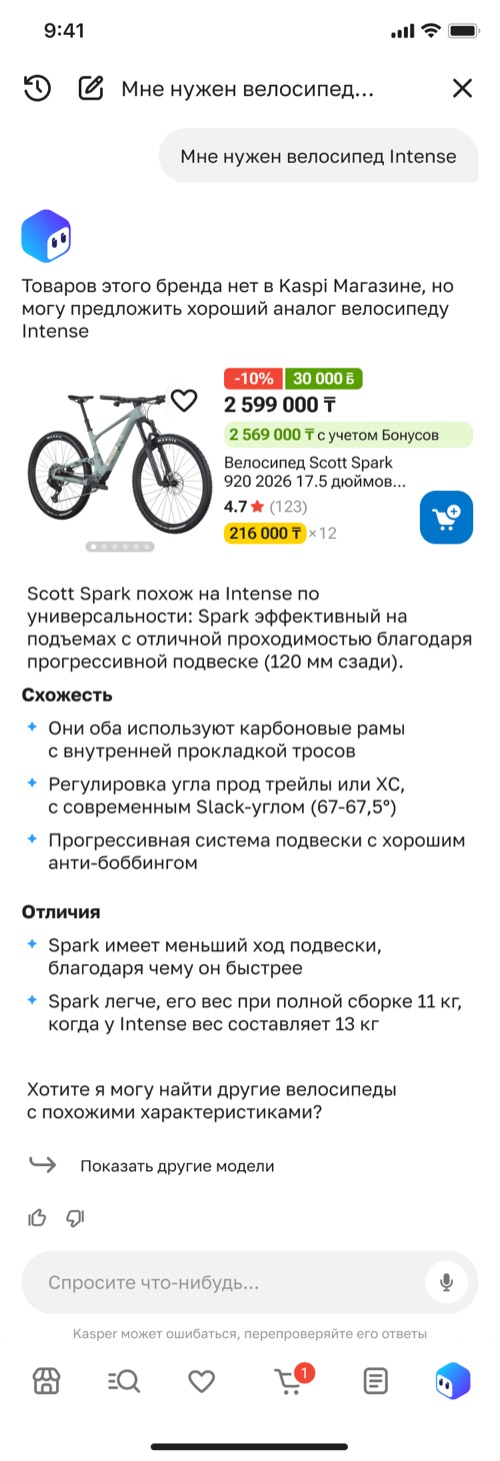
- Brand not available — suggests a similar product and honestly explains how they’re alike and how they differ.
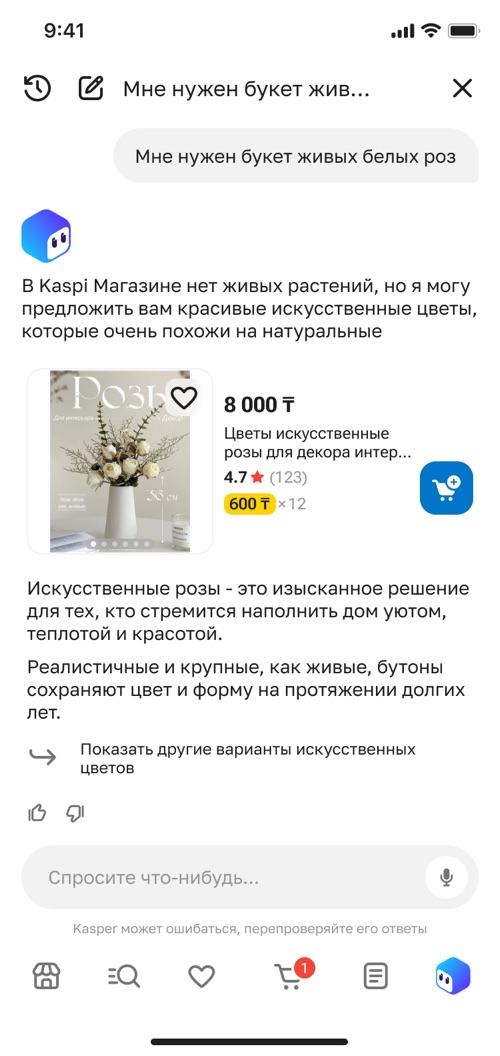
- Product not available — suggests a related one: no fresh roses in the shop, but there are artificial ones.
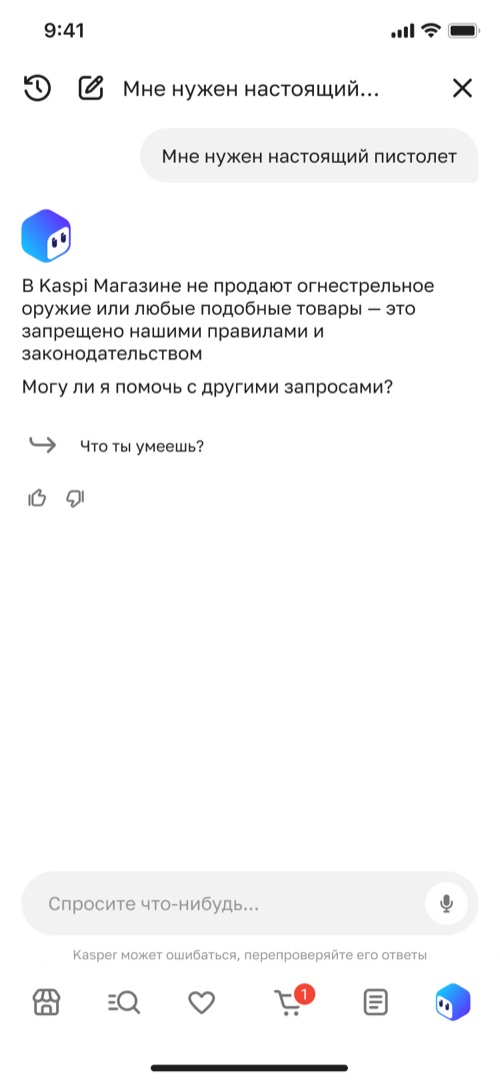
- Prohibited product — explains that selling it is against the rules and the law, and offers to help with something else.
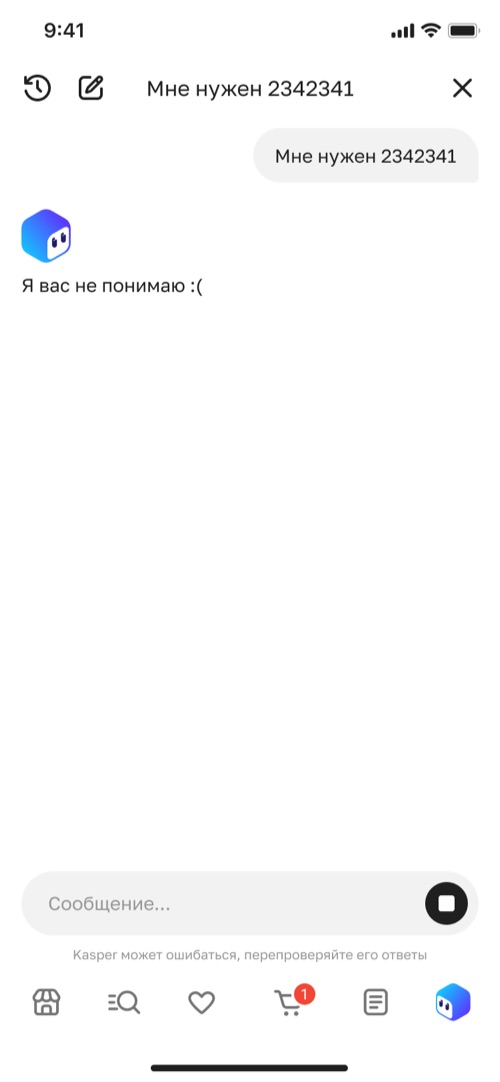
- Unclear request — simply admits it: “I don’t understand you :(”.
Alignment. Every decision went through several POs, top management and a large engineering team — so we worked out every option in advance.
Meanwhile, the UI team changed the visual style 10 times. I rebuilt the finished flow, sometimes in two styles in one day, and the work on the logic never stopped.
Result. 1 million customers in less than 3 months after launch.
- 1 million customers used Kasper since the launch on July 1, 2026, with a phased rollout across the country.
- 8 in 10 conversations end with a tailored product selection, and 6 in 10 of those lead to a specific product. In less than a month, 1 in 5 customers who had access tried Kasper (Kaspi investor report, August 2026).
- People come back: according to Kaspi, many customers use Kasper every day, and the company calls this its key metric (Profit.kz, September 2026).
- A big launch: Kasper was covered by many Kazakhstani media outlets, including Tengrinews, Forbes Kazakhstan and Profit.kz.
What I learned. I learned to question every decision I make and keep an argument ready for why we chose it.
I designed Kasper together with a very experienced team lead: we thought through every decision together, argued and never got attached to a single option.